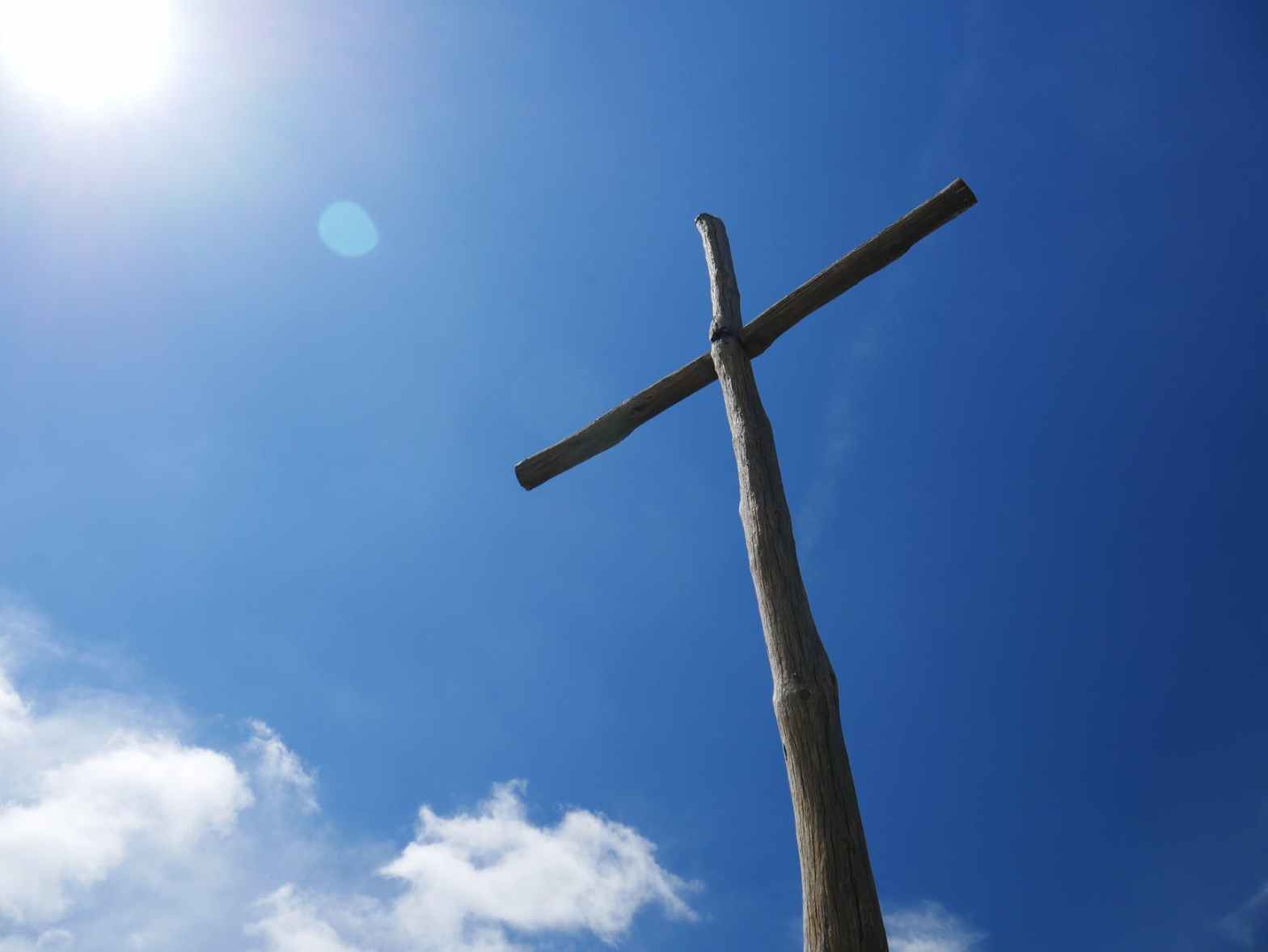
No More Deaths: A Meditation on Psalm 23

Jehová es mi pastor; nada me faltará. En lugares de delicados pastos me hará descansar; Junto a aguas de reposo me pastoreará. Confortará mi alma; Me guiará por sendas de justicia por amor de su nombre. Aunque ande en valle de sombra de muerte, No temeré mal alguno, porque tú estarás conmigo; Tu vara y tu cayado me infundirán aliento. Aderezas mesa delante de mí en presencia de mis angustiadores; Unges mi cabeza con aceite; mi copa está rebosando. Ciertamente el bien y la misericordia me seguirán todos los días de mi vida, Y en la casa de Jehová moraré por largos días. (Salmos 23)

The Lord is my shepherd; I shall not want. He makes me lie down in green pastures. He leads me beside still waters. He restores my soul. He leads me in paths of righteousness for his name’s sake. Even though I walk through the valley of the shadow of death, I will fear no evil, for you are with me; your rod and your staff, they comfort me. You prepare a table before me in the presence of my enemies; you anoint my head with oil; my cup overflows. Surely goodness and mercy shall follow me all the days of my life, and I shall dwell in the house of the Lord forever. (Psalm 23)
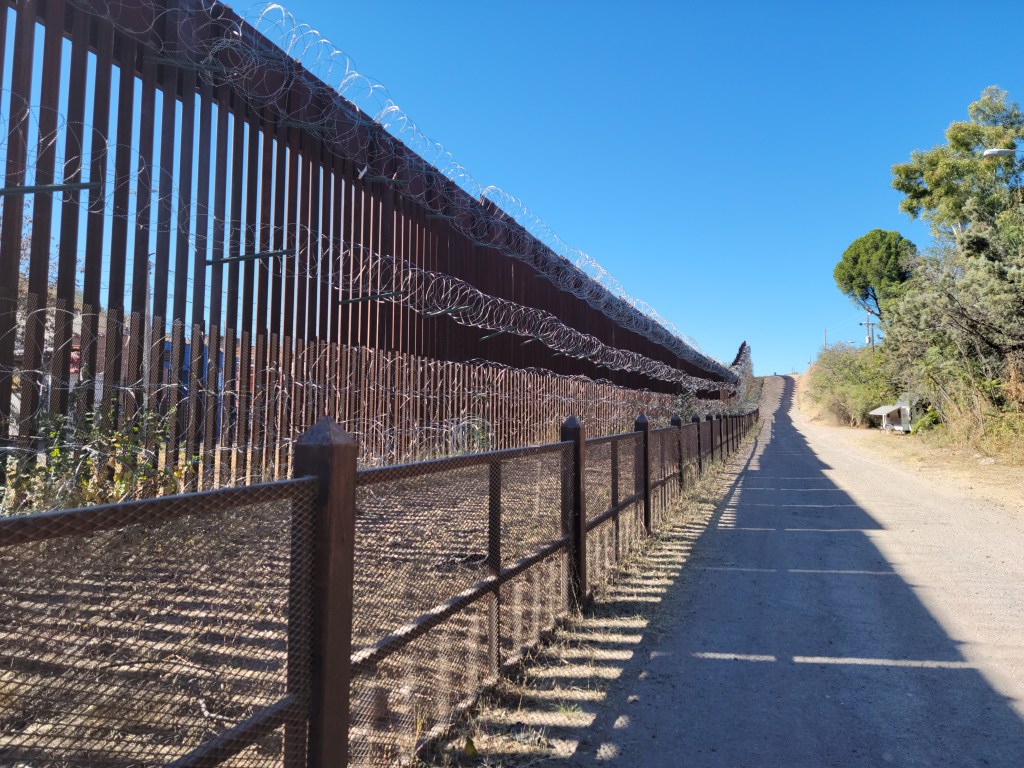
Frontera entre Nogales, Arizona y Nogales, Senora

Good afternoon dear and faithful friends. We gather for worship today in the name of mother God who cradles us close in her arms, in the name of father God who tosses us into the air and catches us with laughter, in the name of Creator God who so intricately and beautifully knit us together to reflect the light of the Son. We gather in the name of Jesus Christ who is on the side of the weak and marginalized and those who are treated without justice. We gather in the name of the Holy Spirit who flows within us to lead us to stand in solidarity with those who are suffering and in the power to resist all forms of oppression. 

We gather in the name of the one from whom our help comes. We gather together to honor the lives and legacies of those who are lost in the wilderness and who were lost to the elements while trying to escape and evade the oppressive systems that have no regard for human life and agency. Our siblings were fleeing persecution, war, misery and famine, and in an attempt to fight their way to a higher standard of living have drowned in the rivers or perished in the heat of the desert.
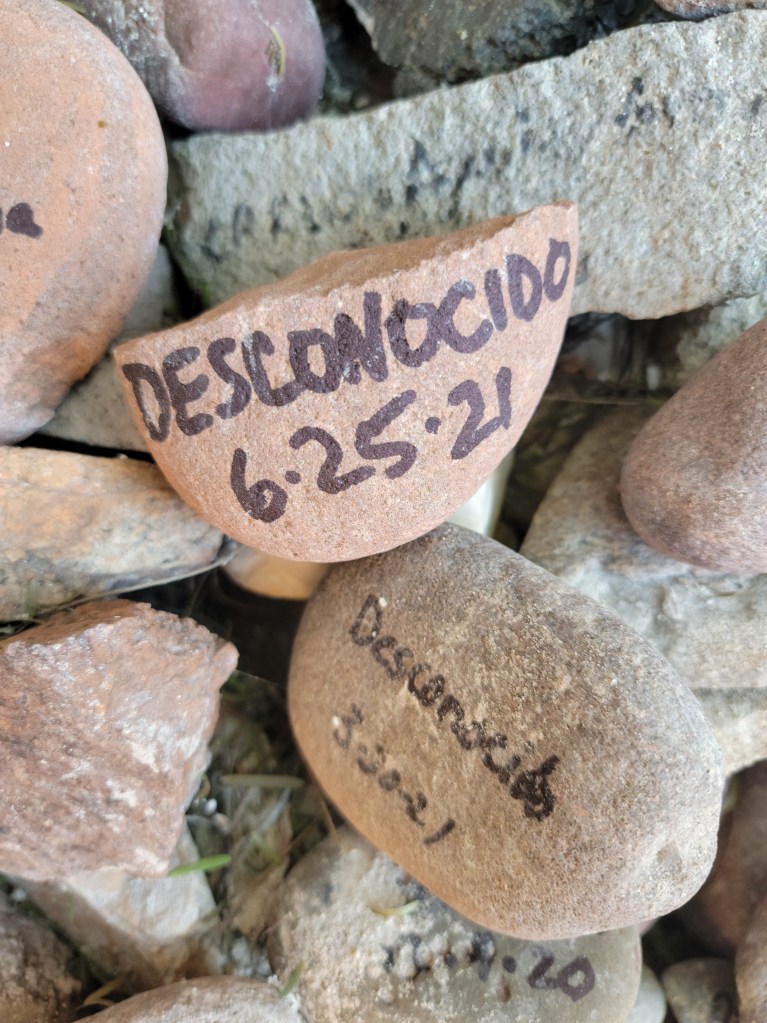
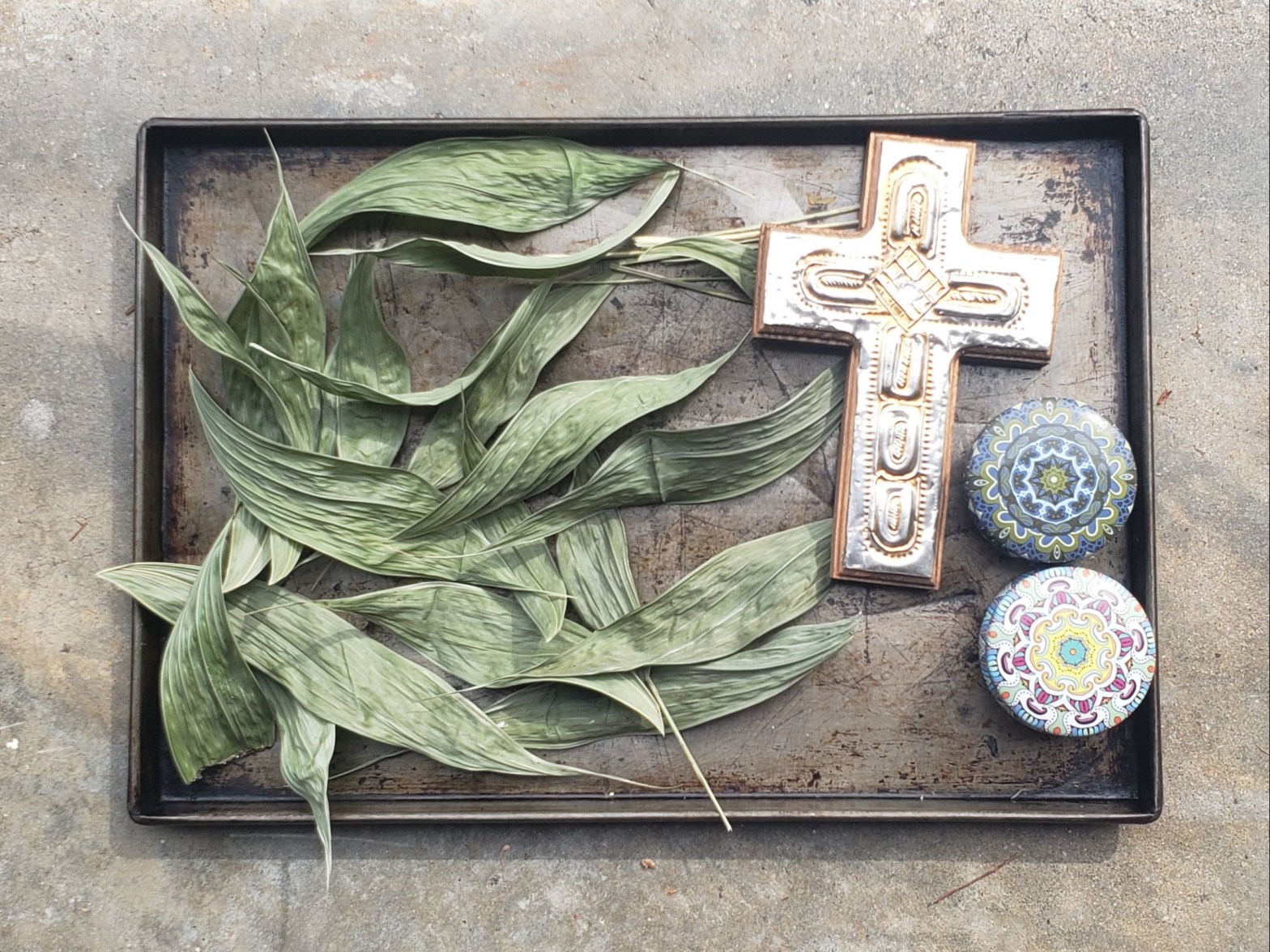
Una roca de una memorial los migrantes.

They were persons of all ages who, aware of the risks, decided to flee because their situation in their countries of origin offered no other possibility. They wanted to live freely. Ellos querían sobrevivir. Ellos querían vivir con dignidad. 

When I hear of the deaths of these sacred souls, I question everything I think and believe about our Creator. ¿De donde viene mi ayuda?  “From where is my help to come?” are no longer words written on a page long ago but the cries of anguish from me and from those begging for assistance. Thomas, one of Jesus’ disciples known for his questioning, asked “How can we know the way?” ¿Podemos saber el camino? It is in moments like this that I have no answers, explanations, or understanding for myself, for the families that lost loved ones, and for the lost opportunity to live a Spirit-filled life? It is in moments like this that I face the fact that death is an everyday reality but I have a hard time facing that in my life and in the lives of those I love and have lost. I don’t want to accept that reality. No one really wants to. Today, however, will not let us escape that reality. 

Today, we walk through the valley of the shadow of death. Andemos en valle de sombra de muerte. Today the familiarity, poetry and beauty of this psalm may have a different tone. The valley is dark. The valley is long and deep. The valley is hot and sweltering and dehydrating. The valley is crawling with agents of institutions of oppression. We cannot deny that reality by letting platitudes and sentimentalities echo off the valley’s walls. The valley is real and the shadow is here. The psalms cry out:

Sálvame, oh Dios, Porque las aguas han entrado hasta el alma. Estoy hundido en cieno profundo, donde no puedo hacer pie; He venido a abismos de aguas, y la corriente me ha anegado. Cansado estoy de llamar; mi garganta se ha enronquecido; Han desfallecido mis ojos esperando a mi Dios. Se han aumentado más que los cabellos de mi cabeza los que me aborrecen sin causa; Se han hecho poderosos mis enemigos, los que me destruyen sin tener por qué. ¿Y he de pagar lo que no robé? Dios, tú conoces mi insensatez, Y mis pecados no te son ocultos. (Salmos 69)

Save me, O God, for the waters have come up to my neck. I sink in the miry depths, where there is no foothold. I have come into the deep waters; the floods engulf me. I am worn out calling for help; my throat is parched. My eyes fail, looking for my God. Those who hate me without reason outnumber the hairs of my head; many are my enemies without cause, those who seek to destroy me. I am forced to restore what I did not steal. You, God, know my folly; my guilt is not hidden from you. (Psalm 69)

Oh God, where are you in the wilderness? A voice cries out to you. The voices that cry out to God from the valley… the voices that cry out in the wilderness are saying

“Preparad camino a Jehová; enderezad calzada en la soledad a nuestro Dios. Todo valle sea alzado, y bájese todo monte y collado; y lo torcido se enderece, y lo áspero se allane. Y se manifestará la gloria de Jehová, y toda carne juntamente la verá; porque la boca de Jehová ha hablado.” (Isaias 40)

“Prepare the way of the Lord; Make straight in the desert a highway for our God. Every valley shall be exalted and every mountain and hill brought low; The crooked places shall be made straight and the rough places smooth; The glory of the Lord shall be revealed, and all flesh shall see it together; for the mouth of the Lord has spoken.” (Isaiah 40)
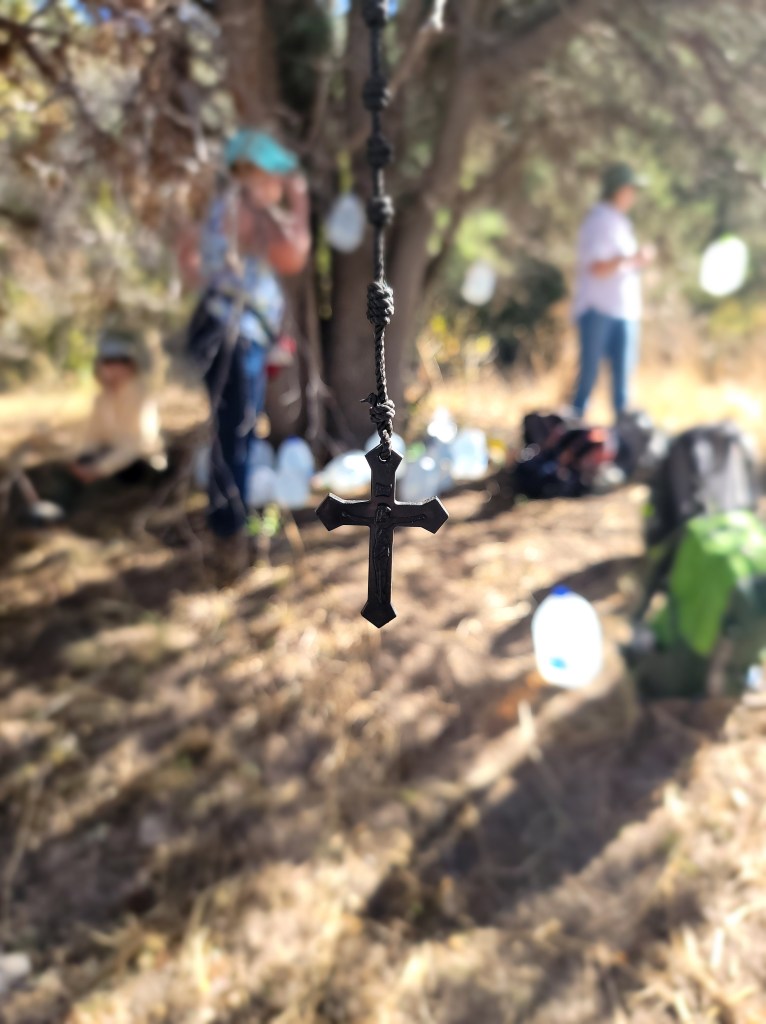
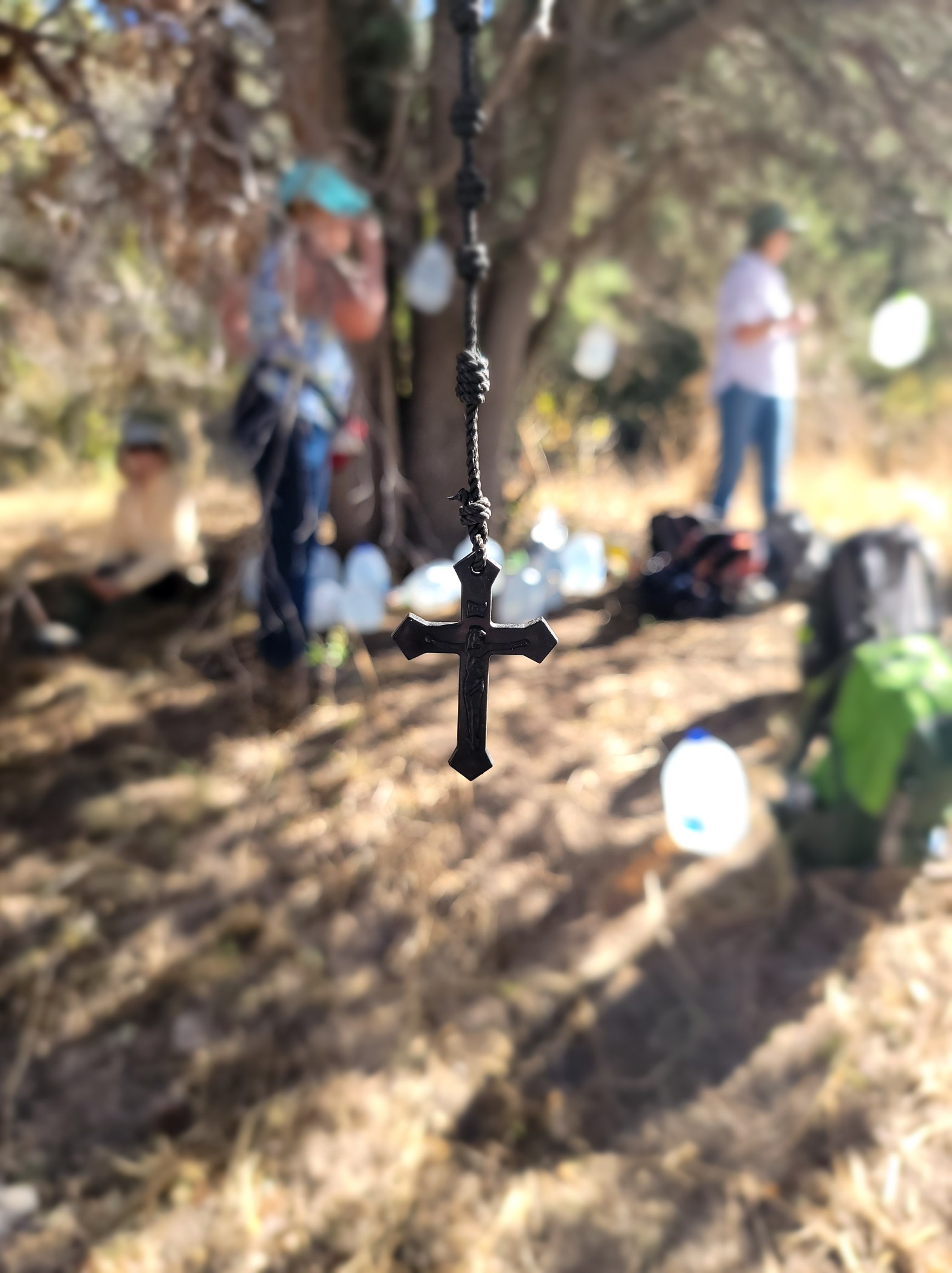
Un rosario colgado de un árbol cerca del agua.

The shadow of death is our reality today. But there is a different reality to behold. Light. Glorious light that fills the darkest night and guides our path so that podemos caminar con esperanza. So that we can walk with hope. 

The light does not undo what has happened nor does it magically take away our pain. The light is not sentimalities or platitudes. It is our way forward. It is our hope. Es nuestra esperanza. The light has been with us since the very beginning. It is constant and trustworthy and it never fades. The shadow of the valley cannot overcome or extinguish it. Some call that light Dios or Jesus. Others might speak of it as the Divine, the Holy, the Mystery. Others understand it as the power of the resurrection. Isaiah spoke of it as the Spirit of the Lord God bringing good news, binding up the brokenhearted, and comforting those who mourn. This light is the greater reality of our day. It is the proof in the lives led by those we have lost. This greater reality is what illuminated the aspirations and dreams of those who took a risk and it gave them hope for a greater tomorrow.

Now, I’m speaking to those who live on this side of the border. I’m speaking to those who have the privilege and now the responsibility to walk in the way of the Lord and help shine the light on the atrocities committed on the land that is not ours to patrol. Dietrich Bonhoeffer once said in response to atrocities in our history that “If I sit next to a madman as he drives a car into a group of innocent bystanders, I can’t, as a Christian, simply wait for the catastrophe, then comfort the wounded and bury the dead. I must try to wrestle the steering wheel out of the hands of the driver.” As Christians, individuality is not a central tenet to our faith. Our faith is centralized in the body and blood of Jesus Christ.

Porque así como el cuerpo es uno, y tiene muchos miembros, pero todos los miembros del cuerpo, siendo muchos, son un solo cuerpo, así también Cristo. Porque por un solo Espíritu fuimos todos bautizados en un cuerpo; y a todos se nos dio a beber de un mismo Espíritu. (1 Corinitios 12)

For just as the body is one and has many members, and all the members of the body, though many, are one body, so it is with Christ. For in one Spirit we were all baptized into one body and all were made to drink of one Spirit. (1 Corinthians 12)
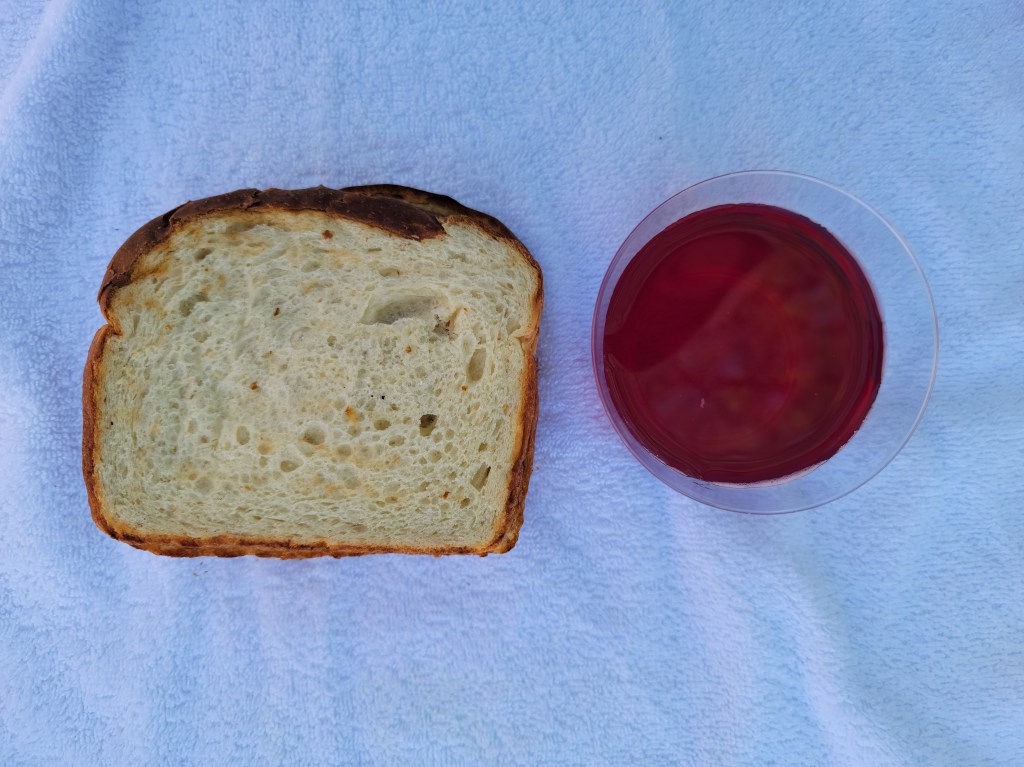
Comunión en el desierto

Our bodies are temples for the Spirit and sanctuaries for the needy. As sanctuaries, we respond to the raids, the detentions, the deportations, and the criminalization of immigrants. As sanctuaries, we strategize to fight individual cases of deportation, to advocate for an end to mass detention and deportation, and to amplify the voices of immigrants. As sanctuaries, we visualize what our communities and world can be. As sanctuaries, we have the moral imperative to take prophetic action, to extend radical hospitality, and share our faith’s ancient tradition of welcome and love.

So until that day when the light pierces the shadow, our challenge, our hope, and our way forward is to put one foot in front of the other. Sometimes, it takes all we have to just take the next step but the glory and the light of the Lord is just over the mountain peak. So we must stay close and walk together.

Today was the Day I had been Waiting for

Today was the day I had been waiting for. 

My first introduction to the Feast at the beginning of the summer, I had been… warned… about what being at the Feast could entail. Each Saturday, I would show up midday, float around, worship, eat, leave. It was easy going. I liked the people I was getting to know but I was always on edge… waiting for the chaos that I was warned about. 

Today was the day I had been waiting for.

I got to the Feast a couple minutes after 12pm, put my bag down, and poked my head in the kitchen to see what we were making for dinner. It was very quiet. Not a lot of people were there and Clarence supposed that we wouldn’t have a lot of people at dinner. I shrugged and said that we would be happy with those who did show up. A couple of hours passed with easy conversation, admiring a new Bible, and trying to plan a sermon. Sandwiches were dropped off. People were milling about but then the first punch was thrown. The Bible was left open on the table.

Today was the day I had been waiting for.

The worry I felt watching two of our community members fighting. The panic that seared through me when I saw the blood. The trepidation as I stood in the distance watching efforts to de-escalate. Despite my uneasiness, I soon found myself sitting on the curb shoulder to shoulder with angry voices, cursing words, and threats of more violence. What were we fighting about? Why did it matter? Could we handle it without having to call for backup? What were the risks of every next move? As the main fire cooled and we started moving inside to start worship, embers of tension threatened to spark again. I was in between the two main instigators and looked into their eyes and just said “Let’s not…”

Today was the day I had been waiting for.

In the hours before worship, instead of preparing, we were deflecting punches. The sermon had not been written. I looked down at the Bible left laying on the table. Luke 6:27-29 looked back up at me. “But I say to you that listen, Love your enemies, do good to those who hate you, bless those who curse you, pray for those who abuse you. If anyone strikes you on the cheek, offer the other also; and from anyone who takes away your coat do not withhold even your shirt. I smiled. I called Randy over and pointed to the Scripture that had been sitting on the table while we had been sitting outside.

Today was the day I had been waiting for.

Worship was starting soon. I went into the kitchen to grab someone a cup of ice water. When I came back out, all the tables were full. When did everyone get there?! Every table suddenly had all my new friends there… The music started and underneath the guitar strumming was the constant humming of murmurs and whispers. The sermon wasn’t written but it didn’t need to be. Everyone’s thoughts and emotions from the day were pouring out. Amen! Hallelujah! Yes! We asked questions and got answers in real time. We were inspired. We prayed over each other. We all watched with apprehensiveness as the two fighters slowly sat beside each other.

Today was the day I had been waiting for.

I got out of my chair to lead Communion. I didn’t think. I let my heart lead me. I looked out across the room and made eye contact with the people who had welcomed me into their tight-knit family and community. At the beginning of the day, we were fighting. We were anxious. We let our fears dictate how we treated each other. Today was hot and messy and ugly. And it was beautiful. In our humanity, we saw our Divinity. I broke the Bread and raised the Cup and called everyone forward to the Feast. Friends and community members from many different backgrounds came and there, at the end of the line, were our two instigators… arms slung around each other… smiles on their faces. In the beauty of that moment, I looked at them and we laughed. They took their pieces and dipped their Bread into the Cup at the same time, together, united by forgiveness, mercy, and love.

Today was the day I had been waiting for.

Div School Year One Lessons

We have reached the end of our first year at Duke Divinity School! What a year it has been! We have learned so much about our selves, our faith, our community… and more. Going into finals next week, I want to take some time and reflect and share tidbits of what I have learned and what I might have wished I had known before starting this journey.

  1. God is good. Trust God. God called you in a pandemic so it’s obvious that God has big plans for you.
  2. Find community. Even when you’re scared and believe that friendships will ultimately fail. They don’t. Friends are sacred in the here and now and in the future. This will take a while. You will soon have a group you can text and eventually you will have individuals. God is still with you and is present in these burgeoning relationships.
  3. Go to chapel. Put your computer away and go to chapel. It’s Tuesdays and Thursdays at 11:35am. The preachers are phenomenal. The students that preach are prophetic. It will be a rare chance to not be in charge of a worship service so take the opportunity to just sit with God.
  4. Say yes. Say yes to lunch invites. Say yes to study dates. Say yes to engaging with theologians. Say yes.
  5. God does not care about your grades but your institutions do so do your best. Your best is not someone else’s best. If you get a 100 and a friend gets a 75, shut your mouth. If you get a 75 and your friend gets a 100, be happy for them. If you do not get a 100, that does not mean you are not 100% loved by God.
  6. A follow up to the previous point: the grading will seem unfair. Check pluses are elusive. Your spiritual practices will be graded and honestly, that sucks.
  7. Not everyone will do all the reading. Some will do all the reading. Everyone will do some reading. Find what works for you.
  8. I was one of the few that did all the reading. How? Get ahead early so you have room to fall behind. Stay 4 to 7 days ahead. Reread what will be talked about in precept so you can talk and get your participation points.
  9. Duke is just one school. The professors are just one view. You have your own heart and mind to reason through and discern what the Holy Scripture means for you and your context. Some of your professors will say the dumbest shit and you will rage about it with your friends at lunch after chapel.
  10. Love yourself. This is the hardest thing you have done so far. You are reconstructing your faith and relationship with God in the midst of a pandemic and a racial reckoning. Your denomination is ripping at the seams but God called you anyway. You are capable. You are loved.

Also… never forget you’re a Tar Heel in the midst of Blue Devils.

Look Up!

House Church – Duke Divinity – 3.12.21

Fourth Sunday of Lent

Numbers 21: 4-9

4 They traveled from Mount Hor along the route to the Red Sea,[a] to go around Edom. But the people grew impatient on the way; 5 they spoke against God and against Moses, and said, “Why have you brought us up out of Egypt to die in the wilderness? There is no bread! There is no water! And we detest this miserable food!” 6 Then the Lord sent venomous snakes among them; they bit the people and many Israelites died. 7 The people came to Moses and said, “We sinned when we spoke against the Lord and against you. Pray that the Lord will take the snakes away from us.” So Moses prayed for the people. 8 The Lord said to Moses, “Make a snake and put it up on a pole; anyone who is bitten can look at it and live.” 9 So Moses made a bronze snake and put it up on a pole. Then when anyone was bitten by a snake and looked at the bronze snake, they lived.

John 3:14-21 (middle of the conversation with Nicodemus)

14 Just as Moses lifted up the snake in the wilderness, so the Son of Man must be lifted up,15 that everyone who believes may have eternal life in him.” 16 For God so loved the world that he gave his one and only Son, that whoever believes in him shall not perish but have eternal life. 17 For God did not send his Son into the world to condemn the world, but to save the world through him. 18 Whoever believes in him is not condemned, but whoever does not believe stands condemned already because they have not believed in the name of God’s one and only Son. 19 This is the verdict: Light has come into the world, but people loved darkness instead of light because their deeds were evil. 20 Everyone who does evil hates the light, and will not come into the light for fear that their deeds will be exposed. 21 But whoever lives by the truth comes into the light, so that it may be seen plainly that what they have done has been done in the sight of God.

Sermon for House Church

So I went to Carolina Cross Connection which is a sleepaway mission trip in rural Western North Carolina. It’s up in the mountains and the camp I was assigned to was deep in the woods next to a lake. My church friends and I slept up in the loft of this old log cabin with no insulation, no window screens, no air conditioning. It was so fun. It was our home for the week but it was also home to many creepy crawlies. One night, we climbed up the ladder into the loft and settled in for bed after a long day of building a deck for Mr. Hubert. When we woke up the next morning, we all had matching spider bites on the top of our left thigh. We all had a central point with black poison spreading out from the bite in a spindly web pattern very much like a horror movie. How creepy. Disgusting. Actually, kinda scary.

The story we read today from the Hebrew Bible is about the same sort of thing. Poison. Venom. Things that kill you. 

We pick up from our lectionary reading last week where the Israelites have been wandering in the wilderness and it is becoming painfully clear that the wandering is, in fact, their own fault. God has led them to the promised land and told them to enter. The people refuse to believe that the land is safe. They cannot trust that the God who has delivered them from slavery can still be trusted to lead them into a land that they believe is dangerous. And so, through their own inability to trust God, they are doomed to wander in a wilderness of their own making instead. As they wander, the Israelites complain. Their gripes are a variation on the same themes we have heard before: “Moses has brought us into the wilderness to die. We don’t have anything to eat– well except manna, but you get tired of the same old thing. We used to have cucumbers and onions and melons in Egypt.” Soon, the grumbling starts to turn inward and upward. Now, the Israelites not only blame Moses, they also blame God. I imagine that God is understandably frustrated and a little fed up. God has led them right up to the border of the promised land and still the people fail to trust in God. So, as rabbis interpret the story, God decides that since the people do not appreciate the care and protection offered, God will take it away. And the vipers and snakes that have been in the desert with them all along now begin to bite the Israelites and kill them. Once again confronted by the consequences of their own bad choices, they turn to Moses. And Moses in turn prays to God. But God’s answer is strange enough to get our attention. “Make a metal serpent,” God tells Moses. “Put it on a pole and lift it up where all the people can see it. Tell the people that if they look at the metal serpent then the snake-bites they suffer won’t kill them.” We have to wonder: Couldn’t God have just as easily taken away the snakes altogether? God could have taken away the venom? But instead, God asks the people to try to trust once again. If they do what God says, the snake bites will not be deadly. All they have to do is look up. 

This story from the book of Numbers is strange enough that we typically skip over it, preferring the stories of manna in the desert and water from a rock. We would prefer not to talk about venom and snakes and all these things that scare us. Except that when we turn to our Gospel reading for today, Jesus has brought this story of serpents and poison back up in his conversation with Nicodemus. As they talk, Jesus draws a parallel between the ways that Moses lifted up the serpent on a pole and the way that he too, as the Son of Man, will be lifted up. For Jesus, both images—the serpent and the cross—are reminders of the saving action of God. At first this seems confusing. After all, the serpent is the very image of the thing that was killing the Israelites. And the cross is, in reality, a weapon of torture and death. But perhaps that is the point. For just as the snake on the staff showed the Israelites what was killing them, the cross shows humans the thing that is killing us. And it isn’t Jesus. It is ourselves. It is what we, in our sin, would do to another human—what we, in our sin, would even do to Immanuel, God with us. These stories—the stories of Moses’ serpent on a stick and even the story of the cross— remind us of how far we have gotten off track. And in them we recognize that reminders of God’s grace are not enough to fix things. We have to, at some point, face our own sin. Our own mistakes. Our own brokenness. In other words…in order to be healed and brought back to life, we have to face the things that are killing us. We have to face ourselves. 

This spiritual practice sucks. This semester has been difficult for all of us. We are discerning our calls while wrestling with the ingrained belief that grades determine our worth. We are slogging away under the intense pressure from our university that points to our wellness days and says: Was that good enough? We are struggling to live normal lives while the most abnormal time is threatening to drown us. We are living in a pandemic that has killed over 500,000 people in just our country due in large part to people that refuse to wear a mask and make sacrifices for their neighbors. Our political leaders are fighting over thousand dollar checks when billionaires are writing off millions of dollars in taxes. George Floyd’s murderer went to trial this week but Breonna Taylor’s walked free along with all the others. We are called to prophetic ministry but unfortunately, our ministry might be curtailed by the biggest donors in the sanctuary. We will repeatedly get pulled aside by parishioners for a gentle, or not-so gentle, scolding when we choose to name a sin when we see it. I know this because it happened to me last summer after my very first sermon in field ed! We must name sins like pride and arrogance. Sins like greed or contempt. Poison that threatens our personal mental and physical health. We must choose to name sins like racism or white supremacy, homophobia and transphobia. Sins that cause us to hate whole groups of other humans or decide they have no place in our society or our church. Sins that burrow deep into our psyche like conspiracy theories that bend the truth. Or sins that cause us to use our planet or other people as commodities that can be wrung out and then thrown away. We must call it out because as it takes root, sin misshapes everything we do. And while we are busy trying to convince ourselves and others that everything is fine…that we’ve moved past all that…as we try to explain away our sin or pretend we aren’t afraid, its poison is already at work, slowly leeching away everything that makes our lives beautiful and good. 

Our Scripture today forces us to face what scares us the most. It reminds us that it is not until we are able to tell the truth—when we are able to be honest about our sin and our need for God—that the bronze serpent and the cross can move from symbols and signs of our own sin and brokenness to new signs of healing and hope. After all, when the Israelites looked at that metal snake, they did not see another snake that would kill them, but instead they were reminded that God could heal. And when we look at the cross, we come face to face with how terribly far the sin of humans will go. We see an imperial tool of torture and death. But we also come face to face with Christ. And in Christ we are reminded of just how far God will go to reach us. It’s in this crucible of promises and love, sin and pain, that we come to understand the true depth and power of God’s love. We are reminded that God can take even the most lethal and deadly parts of our world—the most sinful and selfish parts of ourselves—and find ways to redeem them and remake them into instruments of healing and hope. If only we will let it happen. We don’t often like to talk about the things that scare us or the things that we suspect might be killing us. Jesus told us that light has come into the world, but people loved darkness instead of light because their deeds were evil. Everyone who does evil hates the light, and will not come into the light for fear that their deeds will be exposed. But whoever lives by the truth comes into the light, so that it may be seen plainly that what they have done has been done in the sight of God. Perhaps our Scripture reminds us of something we have forgotten or ignored. It is only when we are willing to look sin in the face… it is only when we are able to name the ways that we have been poisoning ourselves, our relationships, our world…that we can also fully recognize how much we need God to help us, redeem us, and save us. And when we come face to face with that kind of power, that kind of love, we are changed. We are saved. So, let’s not turn away, my friends. Let’s look up to the cross. Look up to the light. Amen.

Bustin’ My Butt

It is week nine in my first semester at Duke Divinity. I am having the time of my life. It is one of the hardest things I have ever done in my life and I love it. I’ve got a little bit of time to share a choppy update of my life right now so let me give you a small peek into my weekly schedule.

Because of the uncertainty surrounding the pandemic and its effects on in-person classes, I decided to delay my move to Durham and remain in Greensboro at my parents’ and commute on the days I have in person classes. It is a weird feeling being in limbo. I relate to the out-of-staters who rely on social media and GroupMe to stay connected but I also have the privilege and opportunity to be in Durham to make face to face connections with new friends and professors.

Every Monday, I get up and pack my bag with my laptop, my notebook, my Bible, and my Hebrew flashcards. I make sure my podcasts are downloaded and I head out the door with coffee in hand to Durham. I spend the afternoon in with my spiritual formation group working our way through the Lord’s Prayer and then spend a couple of hours on the patio with my friends either working on papers or laughing about a professor’s jokes. Due to the hybrid nature of our classes, some of my friends will head to their in-person Church History lecture while Emily and I find an empty classroom to watch the lecture. After class, I mosey back to my car to head to small group with my Greensboro friends. I take my homework with me and sit outside at a brewery for about an hour in my downtime between class and small group. It’s all about balance, ya know?

Tuesday mornings I spend at the store allocating shipment or merchandising the new arrivals before running home to log on in time for my Intro to Biblical Hebrew class. Hebrew intimidates the living snot out of me and I hate being called on to read out loud but then I hear references to the original language in sermons or lectures, I am so excited to recognize the definitions and the grammar and the nuances that have been lost in translations and interpretations of the text. That makes the awkward fumbling through the language worth it. Tuesday afternoons are meant to prepare for Wednesdays so I spend a majority of the afternoon and evening reading and annotating texts like St. Augustine’s Confessions.

Wednesdays are my long days. And I mean long. I wake up at 5:30 to shower and get ready for the day. Of course, my mask has to go with my outfit. Class in Durham starts at 8:30 so I leave around 6:40 to give me enough time to stop at Starbucks if I want and still beat the RTP traffic before climbing the hill to the Chapel from the parking deck. I’m glad I have my jokester of a professor for my morning class because sometimes, by 9am, I already want to go back to bed. I have an in person discussion section right after lecture and we always go over time because we are so interested in interpreting and discussing the Old Testament. From there, I grab some lunch and head to my friend’s on-campus apartment where she is a Graduate Resident and my core group and I log onto a prayer session. I really appreciate that mid-week reset because it reminds me of why I’m doing this whole thing. After prayer and lunch, I head back to the Div school for an afternoon of Church History discussion and lecture. Sometimes, I’ll stay in Durham for the evening for dinner and more homework with friends before heading back to Greensboro around 9pm.

Thursdays, I have class in the morning under the direction of Bishop Will Willimon. We talk about our call to ministry and what it means to be an ordained leader, especially in the United Methodist Church. I have a break for lunch before I’m back online for another class meeting for Hebrew. Thursday afternoons are another opportunity for naps and preparing work for the next week.

Friday mornings, I’m back at the store before, again, running home to log on for Hebrew and then I end my week with my Old Testament lecture.

My weekends are devoted to working at the store and finding time to sleep. Sunday mornings are hit or miss for homework or spiritual care. A lot of times, I sleep in to the very late hour of 8:30am. I log onto virtual Sunday School and leisurely watch worship on Sunday mornings before heading into the store.

Somewhere in the midst of all this, I try to spend time with my family and I’m not very good at it some weeks. I eat dinner with them most nights and fill them in on what I’m up to and what I’m learning. I love to bounce ideas off of them and have a sounding board to vent. Apparently, I’ve done a crazy thing and have done all the reading so far. I don’t think it’s that much if you do a little at a time. I commit about two hours or so a day to homework and reading. Some days it’s more and some days, less. Again… balance. I’m trying to maintain relationships too.

Through it all, I’m very grateful for the love and support offered by my church family and my Greensboro friends. I’m learning a lot about the church, myself, and God. I’ll share a bigger run down of my semester after finals next month.

A Living Sacrifice

Reading: Romans 12: 1-21

My parents were high school sweethearts, specifically high school band sweethearts. They fell in love in their love of music. As a newlywed couple, they were looking for something to get them involved in a community and they decided to join the choir. Six years later, they started a family and my siblings and I were born in choir robes. At the tender age of three months, I played Jesus in the church nativity play. Vacation Bible School and children’s choir were crucial to our development. And eventually, all three of us would enroll in band class and I went on to march in my college band. I joined a musical fraternity and was one of the leaders for an a cappella group. After college, I was the proud youngest member of our chancel choir. Music has always been something that has spoken to me. A year and a half ago, the choir was preparing a song by Craig Phillips titled I Beseech You Therefore, Brethren. It was a new song to us and we were struggling. The melody was different, the timing was weird, and the harmonies were not meshing as fifty people were muddling their way through. I wanted to write this song off. My thought process was “I’ll sing it and I’ll move on”. Even after a couple of weeks of working on it, I was not understanding what it was saying. The song repeats the first verse of this chapter. It seemed like words just strung together with no meaning. So I went to my Bible and read this chapter trying to gain context. And, I still didn’t get it. I was getting so frustrated. The next Wednesday though… the sopranos hit the high, sustained note. The altos, tenors, and basses were all moving seamlessly underneath. Mmm. *chef’s kiss* Beautiful. And it hit me. The meaning. God’s calling radiated from my heart and filled my entire body. Several factors had been brewing in my life and in the church in the early months of 2019 and when God sang to me through this song, I knew I couldn’t ignore it anymore.

The chapter opens with “Therefore, I urge you, brothers and sisters, in view of God’s mercy, to offer your bodies as a living sacrifice, holy and pleasing to God—this is your true and proper worship”. Paul, the author of this letter, spends several chapters previous writing to the Romans exploring elements of God’s relationship with humanity and how God keeps calling out to us but we keep resisting. If you read the Old Testament, the pattern of God calling out and humanity resisting repeats for generations and those cycles have not gone away. So this part of Paul’s letter is a plea to humanity – a plea to the church in Rome – a plea to me to re enter a covenant with God as a new Creation through the love and sacrifice of Jesus Christ. God’s mercies are endless: we have an identity through Jesus, the law was fulfilled and now we live through grace, connected by the Holy Spirit flowing through all of us. In light of this, the best we can do is give it all to God. God has given us everything and in exchange… Paul writes about a living sacrifice. This phrase resonates with me. The word sacrifice brings to mind the burnt offerings on an altar. Sacrifices, offerings, and tithes are different categories of giving to God. Sacrifices were brought in the form of lamb or dove to be killed but a living sacrifice is different! The sacrifice we bring to God is alive, it is us! It is our time, our presence, our gifts, our service, our witness! It is living because this sacrifice stays alive at the altar. Living sacrifices make differences and have lasting, life-changing effects. What we have to offer God, God can use us to make our world better. I hear God calling me into a life of service, academic exploration, and love. I am in agreement with Paul when he says that this is an act of true and proper worship. Worship is translated in the Bible as laying one’s self before God. It is a physical act. I offer myself to leave the comfort of my home, to attend an academically rigorous university, stretch my theological muscles, and go be in ministry. That is my true and proper worship.

God is creative and has made humanity and Creation diverse. Worship for some looks different from what I am used to. And that’s what makes it beautiful. A colorful mixing and appreciation of others makes worship fun. Literally, song and dance and languages in worship keeps you on your toes and engaged wondering how God will be praised next. Verse four says “For just as each of us has one body with many members, and these members do not all have the same function, so in Christ we, though many, form one body, and each member belongs to all the others. We have different gifts, according to the grace given to each of us.” How awesome is that. Everyone has something to offer. It may not look the same as your gift because these members do not all have the same function but every part is valid and cherished because in Christ, we form one. We belong to each other so it is our God-called and moral responsibility to raise up Black Lives and fight oppression. To value disabled bodies as good bodies and not broken. To declare that God made everyone to be who they are and love is love because God is love.

Paul writes that love must be sincere when put into action. Paul then gives guidance in what love in action looks like. Some of my favorites are: Be devoted to one another in love. Honor one another. Be joyful in hope. Practice hospitality. These directions are some that I try to live by and they are qualities that I search for in the world at large. How did I see God in these qualities this summer?

I saw God on my secret trip before my internship started. I was hopeful and excited for what opportunities I might have to learn. My hope has not been driven away by the pandemic. My hope has just changed with every new opportunity and decision.

The music planning team connected through song. One of the lines in my music fraternity’s chorale is Music is a kind and truthful speech; In a language out of mere word’s reach. And that is so true. God sang to us this summer and will continue to sing as we might hear the words in a new way.

I saw God in the pandemic response team and in church council. Sometimes, the Lord’s work is in tough calls and uncertain futures but the care in which decisions are made shows that with God’s help, we are all trying our best.

The lay mentoring team gave me the space to learn and I appreciate what they had to say to me as representatives of God’s word and congregation. Each suggestion and kind critique was an opportunity for God to build my foundation.

My Thursday morning Bible study gave me new ideas about old concepts. Perspectives I had not considered gave me new ways to explore being a follower of Jesus Christ.

One whirlwind 18 hour timeframe gave me the opportunity to meet some of y’all in person. I am very grateful for that time I met people at the river. Being close to the water, underneath a tree of life at the labyrinth, gave me such a thrill to be connected to nature and new friends. By the water, I took time to remember my baptism and ponder the importance of relationships in Christ.

That same day, I had the opportunity to help record worship. It was the first time I had been in a sanctuary since early March and it gave me a new appreciation for holy spaces both in a traditional building and in new arenas of worship such as my home, my backyard, my place of work, and wherever else I might be connected to God.

This summer I went to my first Reconciling Ministries meeting and it affirmed that the future of the church is love. 

To Ben Sims, I just want to say: Here at the rock! Obey all rules! I assume that means the commandment to love God and your neighbor.

To Pastor Anne, thank you. Thank you for your mentorship and guidance. I appreciate your tips and suggestions and your model of being a woman in ministry. Thank you for your friendship, your stories, and your love of fantasy novels and musicals. 

To my Duke cohort: We made it. Through a summer of changing expectations and unclear futures, I think it turned out alright. You showed me God in a variety of ways.

Jackie, we found God in the balance of ministry, work, play, and rest. 

Troy, what ease you approach life. You give it all to God to take care of.

Ian, you affirmed that church is about progress and moving forward.

Griffen, you exemplified structure and the importance of God as your foundation.

Treyvon, thank you for your testimony of truth and power.

Katie, you bring such joy, laughter, and fun. I can’t wait for what Duke and God has for us next.

Now, we all have seen God in different ways this summer. This beginning of a new era was unexpected and yet God has shown us great mercies. How will I offer myself? This semester, it will be by studying hard and learning new things. What will you do in return for the ways you have seen God this summer? I hope you’ll find new ways to worship and draw closer to God. I hope you will continue giving your time and your resources to offer aid for those who need help. I hope you will find ways to connect with others during this disconnected time. 

This has been a challenging, formative, and thrilling experience. God called me into ministry years ago and I finally answered. In a pandemic! Ministry is not a comfortable vocation and it is definitely not comfortable in a pandemic and yet here I am. Starting this journey at this moment in modern history has affirmed that I am strong willed yet flexible, outspoken, and kind. I started the application process before coronavirus was even heard of and soon after my acceptance, the world shut down. However, I knew that if I delayed one more year my stubbornness would become a detriment to my calling and not a benefit. Once I made my mind up, nothing could stop me from pursuing my calling even if I have had to change the stepping stones along the way. This summer experience has taught me how to deal with disappointment, slow decisions, and rapid change. Will I ever be good at dealing with disappointment? Probably not but, this has been a lesson in flexibility and searching for the positive outlook. I have had to adjust my expectations and I have tried to approach every situation with a smile.

Being in community with others is extremely valuable in a crisis where one is not allowed to be physically present. Making friends and relationships with others has been beneficial for my mental and emotional health. It seems that others are wanting the same thing. I have enjoyed getting to know my cohort. I have made some good connections with people in this congregation and I learned that everyone is searching for a connection with each other and the Divine Reflection within us all. 

God is everywhere. One Monday afternoon, during our cohort’s theological reflection time, we said the Lord’s Prayer together. Because Zoom has a slight lag, our voices were bouncing off of each other and it created an echo effect. It was messy but it was beautiful. At that moment, we were in different places: Greensboro, Arapahoe, Milwaukee, Birmingham, Durham, Morehead City but we were all together, connected by our God of Love. Thank you Oriental United Methodist for showing me that abundant love as well.

Subvert the System

Genesis 25: 19-34. 

This is the account of the family line of Abraham’s son Isaac. Abraham became the father of Isaac, and Isaac was forty years old when he married Rebekah, daughter of Bethuel the Aramean from Paddan Aram and sister of Laban the Aramean. Isaac prayed to the Lord on behalf of his wife, because she was childless. The Lord answered his prayer, and his wife Rebekah became pregnant. The babies jostled each other within her, and she said, “Why is this happening to me?” So she went to inquire of the Lord. The Lord said to her, “Two nations are in your womb, and two peoples from within you will be separated; one people will be stronger than the other, and the older will serve the younger.” When the time came for her to give birth, there were twin boys in her womb. The first to come out was red, and his whole body was like a hairy garment; so they named him Esau. After this, his brother came out, with his hand grasping Esau’s heel; so he was named Jacob. Isaac was sixty years old when Rebekah gave birth to them. The boys grew up, and Esau became a skillful hunter, a man of the open country, while Jacob was content to stay at home among the tents. Isaac, who had a taste for wild game, loved Esau, but Rebekah loved Jacob. Once when Jacob was cooking some stew, Esau came in from the open country, famished. He said to Jacob, “Quick, let me have some of that red stew! I’m famished!” (That is why he was also called Edom.) Jacob replied, “First sell me your birthright.” “Look, I am about to die,” Esau said. “What good is the birthright to me?” But Jacob said, “Swear to me first.” So he swore an oath to him, selling his birthright to Jacob. Then Jacob gave Esau some bread and some lentil stew. He ate and drank, and then got up and left. So Esau despised his birthright.

So the reading of Esau and Jacob reminds me of me and my sister. Like these two brothers in Genesis, my sister, Catherine, and I are cut from the same cloth but we are sewn differently. You can tell we come from the same place and we value a lot of the same things. We both cherish family and love music. We both were in the marching band and sang in the choir. We both held leadership positions in multiple arenas. We both have a celebrity crush on Adam Driver. However, I’m a maximalist. She’s a minimalist. I’m loud. She’s typically quieter. I love to read, write, listen to podcasts, and consume academia in the social sciences. She’s more facts and figures. She’s a better dancer.  She wants to move to Hawaii and I’m pretty content with North Carolina. I’m a millennial and she’s Gen Z. All that to say even though we come from the same dynamic and similar upbringing, we are very different people. Throw in a brother between us and you’ve got a family dynamic that’s been around forever. 

I like to imagine Esau and Jacob as a similar situation. These twins were born into a lineage that would one day span generations and give rise to three of the world’s major religions. Abraham, their grandfather, was alive and influential in the family camp and in the land. Isaac, their father, was next in line for inheritance after Ishmael, Isaac’s older brother was sent away. The twins grew up surrounded by their parents and extended family, who I imagine watched the boys closely to see how the next generation would turn out. Esau was a man’s man. He was strong and had thick hair. He was boisterous and assertive. He is your loud older brother. In a society that valued firstborn sons immensely, Esau was perfect. His grandfather and father must have loved Esau for his strength and ability to bring back game and provide food for the camp. We all know someone who is pure charisma and attracts attention from friends and family and is just a force to be reckoned with. But opposite of the perfect firstborn, was Jacob, his quiet younger brother. Genesis 25:27 says that Esau was a cunning hunter but Jacob was a plain man who dwelled in the tents. I can understand why Jacob might’ve felt overlooked. Esau was loved by their father and Jacob was loved by their mother. While Esau went hunting with the rest of the men, Jacob stayed behind and learned how to cook. He probably did other female-oriented tasks like making clothes and tending a garden. I bet Jacob was always being teased by the men and even the women in the family. Why are you doing women’s work? Shouldn’t you be out hunting? Why are you so quiet? You have scrawny arms. Why can’t you be like your brother?

It’s in this context that we come into the reading from today. Jacob is at home fixing a lentil stew. Esau has been out hunting, like always, and comes back famished. It was probably not the first time that this happened and once again, Esau demands food from his weird, younger brother. But I imagine this time was a little different.  This time, tradition says, Jacob was fixing food for Isaac, his father who was grieving the death of Abraham, his father, and in comes Esau with no regard to the delicacy of the situation. “Give me some stew!” “Sell me your birthright!” Jacob responds with his own dose of ridiculousness and sass. After some contentious back and forth, Esau sold his younger brother his birthright for a pot of lentil stew and with that, Jacob was on the road to becoming a greater patriarch over his older brother. The birthright entitled Jacob to the political and economic position of the firstborn. Once Isaac passed, Jacob would legally be the leader of the family and would determine the direction of the entire clan. The holder of the birthright would be the judicial authority for the whole tribe and would receive a double portion of the inheritance. In later chapters of this story, Jacob in collusion with his mother would trick Isaac into giving him the family blessing over his older brother. Esau did receive a blessing as a consolation from Isaac but with the addition of the familial blessing to his bargained for birthright, Jacob was cemented as the more successful patriarch over his older brother with all the legalities and finances that it entailed. The younger brother subverting the older? What a scandal!

But is it? Is it really a scandal when you read the other stories in the Bible? I don’t think so! Looking at the Bible and the stories in it as a whole, we, the reader, can pull out a pattern of behavior. This is not the first story in the Bible where the younger son is favored over the older. This is not even the first contentious brother relationship in the Abrahamic lineage. Abel is favored over Cain, Abraham is favored over Haran, Isaac is favored over Ishmael, and now Jacob is favored over Esau. These stories were told by oral tradition, passed on through family and friends and through different camps as people started to move around. Storytellers would have sat down around a fire at the end of the day or during a trek through the desert and the stories coming out of Abraham’s camp were like nothing people had heard before. The culture that these beloved characters lived in was what is called patrilineal primogeniture. It was built into the society and standardized that the oldest son would be the most favored of all the offspring but the God of Abraham, Isaac, and Jacob kept favoring the younger, the weaker, the unexpected. 

This story resonates with people, then and now. Why? I believe it’s because in a way, this story is hopeful. When you feel like the world is going against you, God tells us that this (whatever this is) is not God’s ultimate plan. God is telling us through these stories that God’s work does not fit into our humanly expectations. It was expected that Esau would get everything and Jacob would get the leftovers. But not in this story. God upended the whole system. We see that God’s expression of love and covenant to Abraham’s people is radical and unexpected. And to some, that may be uncomfortable. We are living in a moment of radical change. Our daily lives have been altered drastically since the onset of the coronavirus. We have to isolate and quarantine for the sake of community health. We wear masks to protect our neighbors and we grow introspective as we see what the pandemic is teaching us. I do not believe that God sent this coronavirus to us as a punishment but since it’s here, I believe that it is an opportunity to lean on God to stretch self-imposed boundaries. I’m uncomfortable because this pandemic is teaching me that the systems that I thought were stable and pragmatic are not healthy and sustainable. 

I see these systems even within the church. Church used to be a place. Church used to be a physical place where you could go and be with people of a similar faith. Church used to be a place that was separate from home and work. My identity as a church-goer and as a Christian was wrapped up in the act of going to the physical building. I scheduled my week around being at church and on church grounds. I loved being in the thick of things surrounded by people but I felt like I couldn’t do church things in non-church spaces. My excuse was that my home was too distracting and it didn’t have the right energy. The act of worship together is still very important and I cried the first time I re-entered a sanctuary but removing the church from the building has granted me an opportunity to reassess what church means to me. Before, church was a thing that I did but now, it is clearer to me that church is a part of who I am. Worship in a pandemic has made me wrestle more with what it means to be a disciple of Christ. With all the boundaries I put on myself removed, I can be still and focus on my relationship with God. The beginning of my seminary journey started in a pandemic and it was like God said to me: You’re doing the right thing but there are a couple of things you need to learn about yourself and your place in the church. Quarantine has given me the opportunity to create a spiritual space in my domestic sphere which in turn has taught me that my spirituality exudes from what I make it to be, not constrained by four walls. 

In quarantine, I’ve had the opportunity to join different virtual Bible studies and small groups that were not available to me before due to scheduling and time constraints. Shout out to my Monday morning Bible study. We, the church, have a calling to serve and be disciples and when the world shut down, the church stepped up. Church offices and sanctuaries closed but when the call for food donations went out, the church fed the 5000 and more. When it was deemed not safe to convene in person, people of the church set about finding new ways to engage in worship. We all learned new skills in order to connect from the safety of our homes. As new research about the coronavirus came out, the church had to be more creative in finding ways to connect outside in a lower risk environment. And when the pandemic revealed more disproportionate effects of racism on our siblings of color, people of the church stepped up and took a stand in protesting the systems that do not honor the divine image of all human beings, regardless of their race, creed, orientation, and national origin. 

It takes a lot of bravery to enact change especially in a system that we think is good and just. The church can be a leader because our ultimate allegiance is to Jesus Christ who challenged the religious and political leaders of His time. The love of God through Jesus Christ unites us as we move towards a better future that erases the divides between us. Jacob and Esau were twins born of the same womb but became enemies. Like them, humanity was born of the same womb labored over by our Creator. Jacob and Esau’s story ends after years of separation and mistrust. Like them, humanity is separated and pitted against each other by our own making. Before Jacob and Esau reconciled with each other, Jacob wrestled with God and was left with a limp as a physical reminder of that encounter. To be able to reconcile with others, we must have an honest encounter with the divine. How do we do that? We can wrestle with God through devotion, prayer, song, and service. We worship God through introspection and action. By engaging with the divine image of others through conversation, reading, writing, and worshiping together, we can subvert an unfair system and favor the younger brother alongside the older.

This is not how I imagined my ministry would begin. I imagined that I would be preaching at the river side. I saw myself in Oriental, NC and at the Coffee Bean and in the sanctuary and serving alongside the community. But I’m preaching at my computer. I’m grasping at straws to make connections with people. I am lamenting. But maybe. Just maybe, God wants me to learn and grow. God wants us all to learn and grow. In the madness and chaos, God swept over the waters and created. I pray that God is using this moment to create something, maybe just a little subversive.

An Unconventional Easter

It’s Easter. We made it. It feels like Lent has been years long and unfortunately, it feels like Lent will continue on for an unforeseeable amount of time. I’ve had my sights set on Easter for the past month – it feels like we’ve arrived but have nowhere to go.

Catherine (my sister) and I put together Easter goodie bags filled with Easter eggs, candy, and notes. We spent hours of our quarantine time decorating the bags and writing heartfelt messages to our closest friends. On Saturday, we drove around Guilford County to secretly drop off the goodies. As we drove away, we texted our friends to check their mailboxes or their front porches. The text messages we got back when the friends found their bags were so sweet. It was so nice to find connection that way. We may have not been physically together this Holy Week but this way was an unconventional way to celebrate during unconventional times.

Worship, praise, and connection does not have to stop when following stay-at-home orders. As the resident seminarian in the house, I led my family in a Maundy Thursday and Good Friday service.

For Maundy Thursday, we entered the Upper Room and washed each others feet. Some churches will do a washing of the feet service but mine does not. It’s time consuming and for a large congregation, the intimacy of washing people’s feet does not translate well. When I told my family what we were going to do, they balked. It took some coaxing but I was able to convince them to let me lead them. For our service of five, it was quite touching. Emulating Jesus in this way made us approach the story in an unconventional way to see another part of the story. At a critical moment of the Passion story, Jesus was not thinking of himself and he took time to serve his disciples. In the hours before a betrayal and a trial, Jesus washed the disciples’ feet. It was customary during this time for the lowest servant to wash the guests’ feet. In a land of open sandals and sandy and dusty roads, the Master reversed the roles and took the place of the servant. Jesus’ entire ministry was about reversing expectations and raising the lowly. He was truly loving them until the end when he showed that through an act of radical servanthood.

In years past, my family and I have gone to and participated in a Tenebrae service at our church. A Service of Tenebrae, or Shadows, is based on twelfth-century late night service which is a mediation on the passion of Christ. As the scripture is read and the music sung and played, the room gets darker and darker until the Christ candle is extinguished and the organ descends into haunting and frightening music. This year, as the rest of world was sequestered away, the Camps sat in the dark and blew out candles as we read through the crucifixion of our Lord and Savior. We circled around the room taking turns to read so that each of us could participate in a way that I hope was meaningful for them. It felt very appropriate to sit in a dark room away from others when remembering that the early Christians, through history and some even today were not allowed to worship, even to the point of death. It is important to recognize our privilege when worshiping in the safety of our physical homes and on outward facing social media. Not all believers across all faiths are allowed such safety.

Another tradition that feels stolen was the ability to gather with extended family but the Camps persevered. All the aunts and uncles and cousins across the nation went outside to their fire pits, to their back porches and patios, or their apartment living rooms and tuned into a Zoom call. My very traditional family who communicates in handwritten thank you cards utilized technology in new ways to be together. It may not seem like a big deal to some but for us, we were able to see into my cousin’s Texan apartment, hear the ocean breeze at Topsail Island, hear the call of a baby in Atlanta, and feel the warmth of a fire in Greensboro.

Easter morning came after we all said our goodbyes and extinguished the bonfire. Easter morning came from empty tombs and empty sanctuaries to full houses and lit computer screens. The passing of the peace had to come through text messages. Communion had to be unconventional too. When you’re yearning for connection during an unconventional time, the question of whether laypeople can serve Communion doesn’t matter. You gather in the kitchen with your broken bagel and cranberry grape juice and you sing “Christ the Lord is Risen Today” because Christ the Lord is risen today! Would I have preferred singing the Hallelujah Chorus next to my friends and family in a full sanctuary? Absolutely. Did I cherish the moments of serenity in the kitchen with my immediate family? Absolutely. Jesus meets us where we are, even in a pandemic. Jesus has left the tomb but has not left the world.

Hour of Darkness: Covid-19

Lord, in your mercy…

The novel coronavirus has plunged our globalized world into darkness. It began in a major transportation hub in China and from there, major city networks were affected. The United States is now number one in cases and overnight, the death count doubled in the thousands. Everyone is on edge and worried and stressed and scared and and and and. It is day fourteen (I think) of social distancing and we are nowhere near being done. Because of the high contagion rate, Guilford County implemented a Stay-at-Home order on Friday and North Carolina will enter a shutdown of everything nonessential to surviving as a whole starting tomorrow. I have temporarily lost my job but I am forever grateful that we live in a technologically advanced society that allows me to stay home and stay safe while being able to call and text and video message with my friends and family. 

This morning, I showered, got dressed, lit my candles and streamed my church’s contemporary service. Afterwards, I logged into my virtual Sunday School class and was able to see and interact with some of my favorite people. I am about to log into a Zoom meeting for church council and tonight, I will log into a virtual youth group. This week, I will be connecting with Tuesdays on Tap and then with the high school small group. 

Meeting with my Sunday School class this morning made me really think about the moment that we’re in and the relationships that we must cherish. My Sunday School class is a special group. All the other classes are based on age groups and life stages but ours is a multigenerational book study. We’re reading The Story which is a more narrative reading of the Bible. It takes multiple viewpoints that are in the Bible and puts them into one story. I was given this book by my aunt a couple Christmases ago so I was thrilled to learn about this class opportunity this year. I love love love that our class is multigenerational. Within each age level, we have the low churched and the high churched  and it allows different perspectives to shine through. Beyond the scholarship, there is a different level of fellowship that you get when you make friends and relationships with people of a different time and perspective.

This week, we read the chapter describing Holy Week. The tone was very dark while it described the pain and suffering in the torture and death of the Savior starting with the betrayal at the Last Supper. Throughout this reading, I kept going back to the dual nature of Jesus and the dual nature that I believe that Creation embodies as well. The dual nature of Jesus is that He was completely divine while being completely human. In this reading of the Last Supper and the events leading up to Jesus’ death, we see his humanity in the pain and suffering that was so real but also so symbolic of the pain and suffering we experience but is now exacerbated by the global pandemic. Next week, we will read the chapter on the Resurrection. We will enter Holy Week and come out on the other side triumphant. Here, we will see Jesus’ divinity in the triumph over death. Divinity embodied humanity in Jesus and as a creation that reflects the divine image, we have divinity in us. During this hour of darkness we must reflect God for others to create Heaven on Earth. 

First off: STAY HOME. If you are not deemed an essential job and you’re not going to the grocery store for food, STAY HOME. Stay home. That’s it. Stay home. This disease is so contagious and dangerous because it incubates for such a long time before you even realize that you have it. And by then, you’ve infected others who will infect others who infect others unless we all STAY HOME. And wash yo hands. Don’t touch your face.

Take care of yourself during this time. We are all scared and stressed and we cannot take care of others if we don’t take care of ourselves. Follow a schedule, even if it says get out of bed by 11am. Primp yourself, even if it’s just to brush your hair. Set goals, even if it’s to just put on a bra.

Exercise. We need the endorphins. Endorphins make you happy. And happy people just don’t kill their husbands. Stretch every morning. Walk laps around the neighborhood. Run up and down your stairs. Lift weights with canned goods if you have to. While taking care of your physical self, take care of your spiritual self. Pray. Engage in spiritual practices that center you and draw you closer to the Divine. I journal, practice yoga, play piano, and handletter. I use my talents to center myself and I enjoy making things for others.

Now that we’ve taken care of ourselves, take care of others. If you can, use your financial blessings to bless others. As a small business employee, I can personally attest to the benefits of shopping locally. It keeps money here at home and stimulates the economy and that’s what we will need to drag ourselves out of this financial mess. 

In the meantime, people are going to starve if we don’t take care of our most vulnerable. Christ United Methodist Church took on this issue for our Lenten Offering and it is imperative that we support this. Food instability was a concern before but now, people are out of work and children are out of school. People are not making enough money to buy food for the home and kids who used to rely on school breakfast and lunches will go hungry. A large percentage of our college and university workers and students relied on dining halls and food pantries for food. Now, dining halls are closed and the food pantry is bare. Our transient and unhoused populations are relying on us too, to care for their needs and donate to food pantries like Greensboro Urban Ministry, Out of the Garden, and The Spartan Open Pantry. Additionally, you can support The Table at our Glenwood Campus which offers a free meal (to-go for now) on Monday evenings to over 100 people in the Glenwood neighborhood. Again, it is up to us to support this ministry. To give to our Lenten offering, give online at christgreensboro.org/lentenoffering; text “Lent 100” (change number to desired gift amount) to 984-237-2862; or mail a check earmarked “Lenten Offering” to the Church Office at 410 N. Holden Road, Greensboro, 27410.

And finally, social distancing does not mean distancing socially. Reach out to your friends and family. Call an older neighbor, friend, at-home member of your congregation. Maintain your small group schedule and schedule other virtual meetups. We’re in this together. We are not alone.

Call Statement

My name is Caroline Truelove Camp and I have been called to a life of ministry and service. 

The United Methodist Church has raised me and I call it my home. Growing in faith at multiple Methodist churches across the Western North Carolina conference, I have had many experiences that have comforted me and also some that have challenged me. Vacation Bible School taught me that church is fun. Every level of church choir has taught me how to make a joyful noise. Every youth retreat taught me that friends in faith are sacred. Every mission trip was and is a mountain high experience. Now as an adult, God has tapped me on the shoulder and pressed on my heart to go into the field and embody Christ for others.

Clemmons United Methodist Church taught me that church is for families. A young couple looking for a newlywed activity joined the choir and through the years would bring their three children to be baptized at this location. Those children were raised by children’s choir practice, Vacation Bible School, and Children’s Church. I was raised by those spiritual practices. My childhood was engulfed with the sound of music and I traveled the southeast with my father’s southern gospel quartet: the Sons of Thunder Quartet. I would help set up sound equipment and then scamper off with my siblings to explore another church. The architecture and the art would amaze me even as a young child and it solidified my comfort level with the church even as a young child. Churches have always been a place of refuge and not a detached location of stuffy liturgy. 

Boone United Methodist Church taught me that church is a tradition. Under the direction of AJ Thomas, I learned the roadmap of the Methodist church starting with the strangely warmed heart of John Wesley and his theology of grace. I participated in a liturgical tradition that required me to stand before the congregation and remember my baptism. I spoke a vow to be faithful with my presence, my gifts, and my service. I had a level of maturity to begin to focus on the words I was saying every week, every month, every Christmas and Easter season. Liturgy started becoming a place that I could look to that would connect me with the congregation around me and the congregations that had come before me. 

Oak Ridge United Methodist Church taught me that church can be a challenge. Adolescence is a difficult time for some and as a deep theology seeker, I was wrestling with my own obstacles. At a critical social development point, I attended a church that was out of my school district so I knew very few people. I wanted to connect with people my age but felt ostracized for my desire for a deeper dive into the Word. Thankfully, a few other youths were feeling the same desire so under the direction of Karen Kurtz, we completed the full version of Disciple I. I was thrilled to find that questions of faith can be challenged and pushed to think broader and go deeper.

University United Methodist Church in Chapel Hill, North Carolina taught me that church is for the wayward traveler, not just the faithfully secure. College is a dark and depressing time for many and for me, it pushed me away from my faith. I was known in my circle of friends as the Christian, the Bible nerd, the believer, but underneath my ability to think critically, I had no emotion for anything. I was struggling to discern my direction in life. It wasn’t until I dragged my suicidal self down to the Methodist church on Franklin Street that I experienced a resurrection of spiritual life. Just being in the building, I could feel the arms of God around me. I left the church that Sunday afternoon sobbing knowing that I would survive. God loves me, all of broken yet redeemed me.

Christ United Methodist Church taught me that God would use me. Moving back to Greensboro, I started attending church with my family again. It would be here that God set in motion a series of events that would lead me to sit down to a lunch meeting with Louis Timberlake and say I want to go to seminary. I want to be a pastor. I initially was just a volunteer youth leader. I love those youths will all of my heart. The spiritual resurrection I had experienced in Chapel Hill was still fresh and loving on those kids awakened a whole new perspective of what it is like to be a leader in the church. I would eventually join a choir again. Being in the choir has come full circle. It once was an activity for my newlywed parents and now it is something my father and I enjoy together. Sitting in a room as the youngest participant, I learn a lot of what it means to be a Christian: humble, kind, full of life. I am on two committees, one where we try to engage newcomers to the church and one where I am the young adult representative for our Discipleship ministries. I lead the young adult small group which has opened an avenue to engage and discuss multiple theological viewpoints and also where I have found wonderful friends. After our merge with Glenwood United Methodist Church, I connected with Carter Ellis as we took the Table and turned it into a spaceship for Glenwood’s first-ever Vacation Bible School. In the summer of 2019, I stepped into an interim position as the Communications Director and I felt like I was just getting a taste of what God has called me to do. I thank Morris Brown for his trust in my efforts. I helped create a new ministry movement in my time on staff and it was thrilling. In the fall of 2019, I returned home from a construction based mission trip under the direction of Virginia Reynolds and our partnership with ReHace. Seeing my work resonate with my team members and with people around the world and their faith journey has been life-changing and validating.

Every church experience has taught me something. Every person that I have encountered, whether it be a positive or negative experience, has taught me something. God loves all. God uses the smallest characters to create a monumental impact. Jesus Christ used a little boy’s small offering of loaves and fish to feed a mountainside full of people with plenty to spare. The Holy Spirit has asked for my loaves and fish and I would like to share.