House Church – Duke Divinity – 3.12.21
Fourth Sunday of Lent
Numbers 21: 4-9
4 They traveled from Mount Hor along the route to the Red Sea,[a] to go around Edom. But the people grew impatient on the way; 5 they spoke against God and against Moses, and said, “Why have you brought us up out of Egypt to die in the wilderness? There is no bread! There is no water! And we detest this miserable food!” 6 Then the Lord sent venomous snakes among them; they bit the people and many Israelites died. 7 The people came to Moses and said, “We sinned when we spoke against the Lord and against you. Pray that the Lord will take the snakes away from us.” So Moses prayed for the people. 8 The Lord said to Moses, “Make a snake and put it up on a pole; anyone who is bitten can look at it and live.” 9 So Moses made a bronze snake and put it up on a pole. Then when anyone was bitten by a snake and looked at the bronze snake, they lived.
John 3:14-21 (middle of the conversation with Nicodemus)
14 Just as Moses lifted up the snake in the wilderness, so the Son of Man must be lifted up,15 that everyone who believes may have eternal life in him.” 16 For God so loved the world that he gave his one and only Son, that whoever believes in him shall not perish but have eternal life. 17 For God did not send his Son into the world to condemn the world, but to save the world through him. 18 Whoever believes in him is not condemned, but whoever does not believe stands condemned already because they have not believed in the name of God’s one and only Son. 19 This is the verdict: Light has come into the world, but people loved darkness instead of light because their deeds were evil. 20 Everyone who does evil hates the light, and will not come into the light for fear that their deeds will be exposed. 21 But whoever lives by the truth comes into the light, so that it may be seen plainly that what they have done has been done in the sight of God.
Sermon for House Church
So I went to Carolina Cross Connection which is a sleepaway mission trip in rural Western North Carolina. It’s up in the mountains and the camp I was assigned to was deep in the woods next to a lake. My church friends and I slept up in the loft of this old log cabin with no insulation, no window screens, no air conditioning. It was so fun. It was our home for the week but it was also home to many creepy crawlies. One night, we climbed up the ladder into the loft and settled in for bed after a long day of building a deck for Mr. Hubert. When we woke up the next morning, we all had matching spider bites on the top of our left thigh. We all had a central point with black poison spreading out from the bite in a spindly web pattern very much like a horror movie. How creepy. Disgusting. Actually, kinda scary.
The story we read today from the Hebrew Bible is about the same sort of thing. Poison. Venom. Things that kill you.
We pick up from our lectionary reading last week where the Israelites have been wandering in the wilderness and it is becoming painfully clear that the wandering is, in fact, their own fault. God has led them to the promised land and told them to enter. The people refuse to believe that the land is safe. They cannot trust that the God who has delivered them from slavery can still be trusted to lead them into a land that they believe is dangerous. And so, through their own inability to trust God, they are doomed to wander in a wilderness of their own making instead. As they wander, the Israelites complain. Their gripes are a variation on the same themes we have heard before: “Moses has brought us into the wilderness to die. We don’t have anything to eat– well except manna, but you get tired of the same old thing. We used to have cucumbers and onions and melons in Egypt.” Soon, the grumbling starts to turn inward and upward. Now, the Israelites not only blame Moses, they also blame God. I imagine that God is understandably frustrated and a little fed up. God has led them right up to the border of the promised land and still the people fail to trust in God. So, as rabbis interpret the story, God decides that since the people do not appreciate the care and protection offered, God will take it away. And the vipers and snakes that have been in the desert with them all along now begin to bite the Israelites and kill them. Once again confronted by the consequences of their own bad choices, they turn to Moses. And Moses in turn prays to God. But God’s answer is strange enough to get our attention. “Make a metal serpent,” God tells Moses. “Put it on a pole and lift it up where all the people can see it. Tell the people that if they look at the metal serpent then the snake-bites they suffer won’t kill them.” We have to wonder: Couldn’t God have just as easily taken away the snakes altogether? God could have taken away the venom? But instead, God asks the people to try to trust once again. If they do what God says, the snake bites will not be deadly. All they have to do is look up.
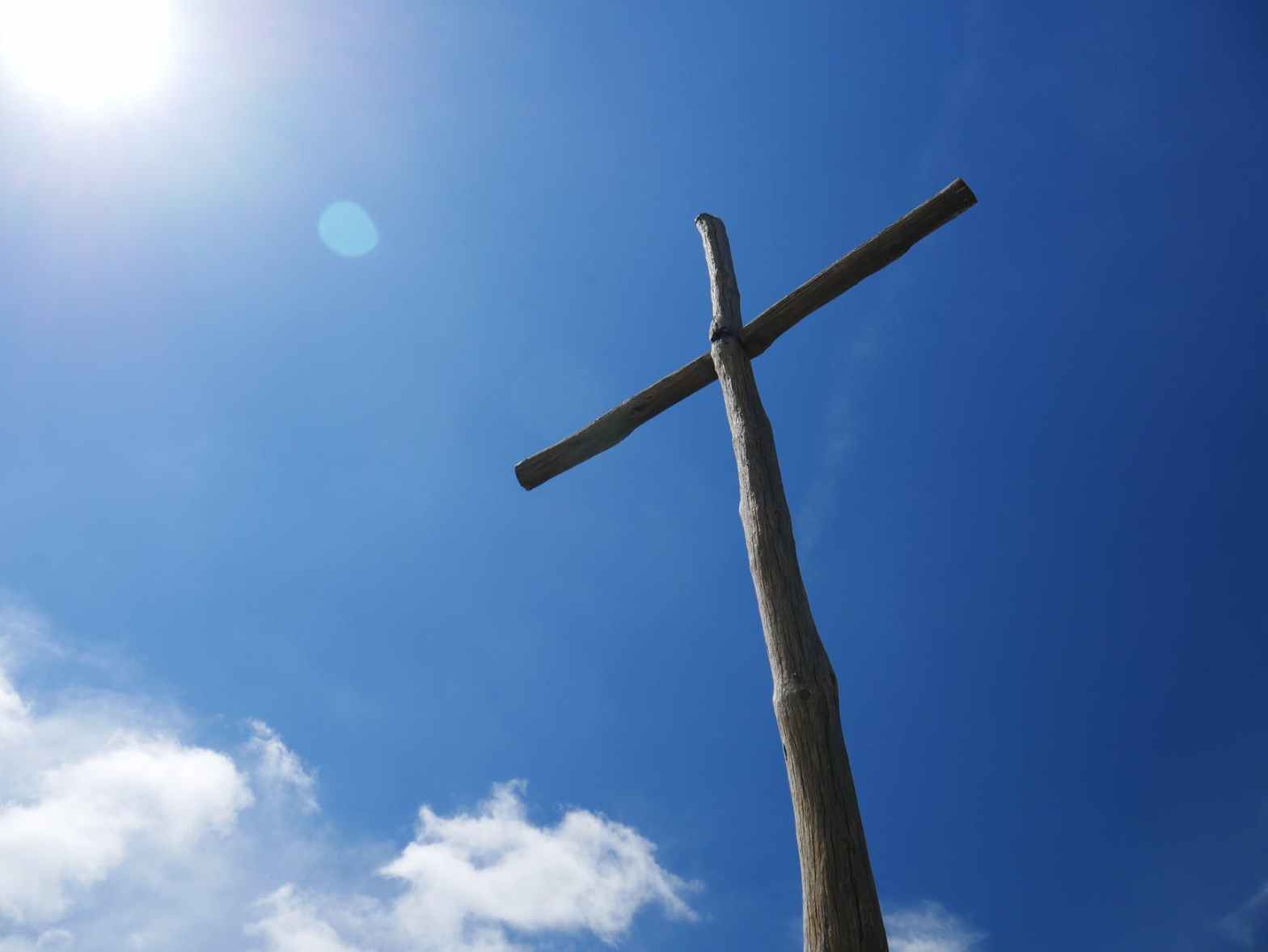
This story from the book of Numbers is strange enough that we typically skip over it, preferring the stories of manna in the desert and water from a rock. We would prefer not to talk about venom and snakes and all these things that scare us. Except that when we turn to our Gospel reading for today, Jesus has brought this story of serpents and poison back up in his conversation with Nicodemus. As they talk, Jesus draws a parallel between the ways that Moses lifted up the serpent on a pole and the way that he too, as the Son of Man, will be lifted up. For Jesus, both images—the serpent and the cross—are reminders of the saving action of God. At first this seems confusing. After all, the serpent is the very image of the thing that was killing the Israelites. And the cross is, in reality, a weapon of torture and death. But perhaps that is the point. For just as the snake on the staff showed the Israelites what was killing them, the cross shows humans the thing that is killing us. And it isn’t Jesus. It is ourselves. It is what we, in our sin, would do to another human—what we, in our sin, would even do to Immanuel, God with us. These stories—the stories of Moses’ serpent on a stick and even the story of the cross— remind us of how far we have gotten off track. And in them we recognize that reminders of God’s grace are not enough to fix things. We have to, at some point, face our own sin. Our own mistakes. Our own brokenness. In other words…in order to be healed and brought back to life, we have to face the things that are killing us. We have to face ourselves.
This spiritual practice sucks. This semester has been difficult for all of us. We are discerning our calls while wrestling with the ingrained belief that grades determine our worth. We are slogging away under the intense pressure from our university that points to our wellness days and says: Was that good enough? We are struggling to live normal lives while the most abnormal time is threatening to drown us. We are living in a pandemic that has killed over 500,000 people in just our country due in large part to people that refuse to wear a mask and make sacrifices for their neighbors. Our political leaders are fighting over thousand dollar checks when billionaires are writing off millions of dollars in taxes. George Floyd’s murderer went to trial this week but Breonna Taylor’s walked free along with all the others. We are called to prophetic ministry but unfortunately, our ministry might be curtailed by the biggest donors in the sanctuary. We will repeatedly get pulled aside by parishioners for a gentle, or not-so gentle, scolding when we choose to name a sin when we see it. I know this because it happened to me last summer after my very first sermon in field ed! We must name sins like pride and arrogance. Sins like greed or contempt. Poison that threatens our personal mental and physical health. We must choose to name sins like racism or white supremacy, homophobia and transphobia. Sins that cause us to hate whole groups of other humans or decide they have no place in our society or our church. Sins that burrow deep into our psyche like conspiracy theories that bend the truth. Or sins that cause us to use our planet or other people as commodities that can be wrung out and then thrown away. We must call it out because as it takes root, sin misshapes everything we do. And while we are busy trying to convince ourselves and others that everything is fine…that we’ve moved past all that…as we try to explain away our sin or pretend we aren’t afraid, its poison is already at work, slowly leeching away everything that makes our lives beautiful and good.
Our Scripture today forces us to face what scares us the most. It reminds us that it is not until we are able to tell the truth—when we are able to be honest about our sin and our need for God—that the bronze serpent and the cross can move from symbols and signs of our own sin and brokenness to new signs of healing and hope. After all, when the Israelites looked at that metal snake, they did not see another snake that would kill them, but instead they were reminded that God could heal. And when we look at the cross, we come face to face with how terribly far the sin of humans will go. We see an imperial tool of torture and death. But we also come face to face with Christ. And in Christ we are reminded of just how far God will go to reach us. It’s in this crucible of promises and love, sin and pain, that we come to understand the true depth and power of God’s love. We are reminded that God can take even the most lethal and deadly parts of our world—the most sinful and selfish parts of ourselves—and find ways to redeem them and remake them into instruments of healing and hope. If only we will let it happen. We don’t often like to talk about the things that scare us or the things that we suspect might be killing us. Jesus told us that light has come into the world, but people loved darkness instead of light because their deeds were evil. Everyone who does evil hates the light, and will not come into the light for fear that their deeds will be exposed. But whoever lives by the truth comes into the light, so that it may be seen plainly that what they have done has been done in the sight of God. Perhaps our Scripture reminds us of something we have forgotten or ignored. It is only when we are willing to look sin in the face… it is only when we are able to name the ways that we have been poisoning ourselves, our relationships, our world…that we can also fully recognize how much we need God to help us, redeem us, and save us. And when we come face to face with that kind of power, that kind of love, we are changed. We are saved. So, let’s not turn away, my friends. Let’s look up to the cross. Look up to the light. Amen.
 THE SOUTHERN SEMINARIAN